Now Reading: Ukrainian Americans Turn Against Trump Over Ukraine Policy Ahead of US Midterm Elections
-
01
Ukrainian Americans Turn Against Trump Over Ukraine Policy Ahead of US Midterm Elections
Ukrainian Americans Turn Against Trump Over Ukraine Policy Ahead of US Midterm Elections

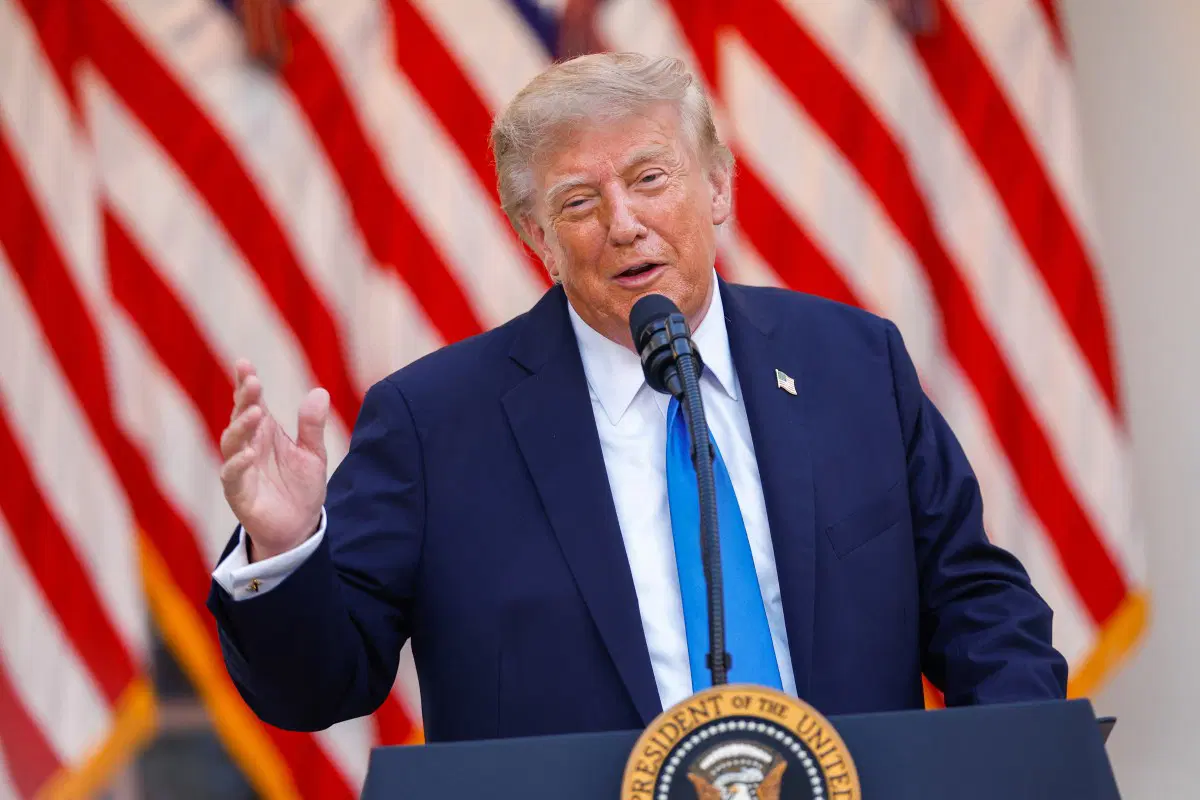
Ukrainian Americans in the United States are expressing growing anger towards President Donald Trump over his administration’s recent approach to Russia’s war against Ukraine, with some longtime Republican supporters threatening to vote against their party in the November 3 midterm elections.
The growing dissatisfaction follows a series of decisions by the Trump administration that critics believe have weakened Washington’s support for Kyiv and brought the United States closer to Moscow.
In Jenkintown, a suburb outside Philadelphia, members of the Ukrainian American Senior Citizens Association voiced concerns about what they described as Trump’s shift towards Russian President Vladimir Putin.
One of them, Irene Skulsky, a retired teacher in her late 70s, said her son, Darko, narrowly escaped death when Russian drone missiles struck vehicles ahead of him while he was travelling to work in Kyiv.
According to Skulsky, five cars in front of her son were hit, killing several people. She alleged that the absence of an advance warning was linked to Washington’s decision to suspend intelligence-sharing arrangements with Ukraine, which had helped provide early warnings of Russian missile attacks.
Although the Trump administration denied stopping intelligence-sharing with Ukraine, President Volodymyr Zelenskyy said the country received no advance warning from US intelligence networks ahead of two waves of Russian missile attacks.
Skulsky said the situation had changed her political outlook, urging fellow Ukrainian Americans to put Ukraine’s interests above party loyalty when voting.
“When we vote, we have to vote with Ukraine in our hearts,” she said, calling on voters to help shift the balance of power in Congress and the Senate.
Her frustration also extended to Republican lawmakers, whom she accused of failing to challenge Trump’s decisions because they feared losing their political positions.
The discontent comes as Trump faces criticism over several foreign policy decisions, including his reported agreement with Putin to purchase nearly five million tonnes of diesel, his calls for Ukrainians to replace Zelenskyy and allegations that his administration restricted Ukraine’s access to the Starlink satellite internet service.
Trump had promised during his 2024 presidential campaign to end the Russia-Ukraine war within 24 hours of returning to office. However, his handling of the conflict has increasingly unsettled Ukrainian Americans who expected stronger support for Kyiv.
Eugene Luciw, a retired lawyer and local representative of the Ukrainian Congress Committee of America, said foreign policy had become the leading concern for many Ukrainian-American voters.
He warned that a Russian victory in Ukraine could have wider consequences for global security, arguing that the conflict could set the stage for a broader international war.
Beyond Ukraine, Trump’s handling of the war involving Iran and his tariff policies have also emerged as potential political liabilities for Republicans ahead of the midterm elections.
The conflict involving Iran, launched alongside Israel in February, has disrupted energy supplies following the closure of the Strait of Hormuz, a major global shipping route. The disruption has contributed to rising international oil prices, pushing up petrol and diesel costs for American consumers.
Trump’s tariffs have also increased the cost of imported raw materials and consumer goods, while straining trade relations with traditional allies, including Canada.
In Michigan, Republican Senate candidate Mike Rogers has reportedly urged Trump to end the trade dispute with Canada, declaring in a campaign advert that the neighbouring country was not an enemy of the United States.
However, the growing dissatisfaction among Ukrainian Americans appears particularly significant because many in the community have historically supported Republicans due to the party’s strong anti-communist stance during the Cold War.
Andrij Chornodolsky, chairman of the Ukrainian American Senior Citizens Association, said members were struggling to understand why Washington appeared to be supporting a country seeking to bring Ukraine under Russian control.
He also criticised Republican lawmakers for remaining silent over Trump’s recent decisions, arguing that their failure to speak out amounted to support for the President’s position.
The political shift is becoming evident among longtime Republican voters. Peter and Orysia Hewuka, a couple who had previously voted for Trump, said they were considering supporting a local Democratic candidate because of his administration’s Ukraine policy.
Peter Hewuka, an 88-year-old retired nuclear physicist, described the decision as difficult but said he could no longer support politicians who backed Trump’s approach.
“The Republican party has left us, we haven’t left the Republican party,” he said.
Luciw also claimed that more than 75 per cent of Ukrainian Americans who previously supported Trump had now abandoned him, citing reactions from his interactions on social media and elsewhere.
Similarly, Mykola Hryckowian, director of the Center for US-Ukrainian Relations, said he had voted for Trump three times but could no longer support him following his recent decisions on Ukraine.
Not all members of the Ukrainian-American community expressed surprise. Mark Andryczyk, a Ukrainian studies scholar at Columbia University, said he had never expected Trump to be beneficial to Ukraine, arguing that Russia had welcomed his election victories.
The growing dissatisfaction could pose challenges for Republican candidates in the November 3 midterm elections, particularly as voters weigh the economic consequences of the administration’s foreign and trade policies.
However, the outcome could also have wider implications for US foreign policy, with a Democrat-controlled Congress potentially limiting Trump’s domestic political room for manoeuvre during the final two years of his presidency.