Now Reading: WHO Chief Urges Countries to Finalise Global Pandemic Treaty Amid Deadly Ebola Outbreak in DR Congo
-
01
WHO Chief Urges Countries to Finalise Global Pandemic Treaty Amid Deadly Ebola Outbreak in DR Congo
WHO Chief Urges Countries to Finalise Global Pandemic Treaty Amid Deadly Ebola Outbreak in DR Congo

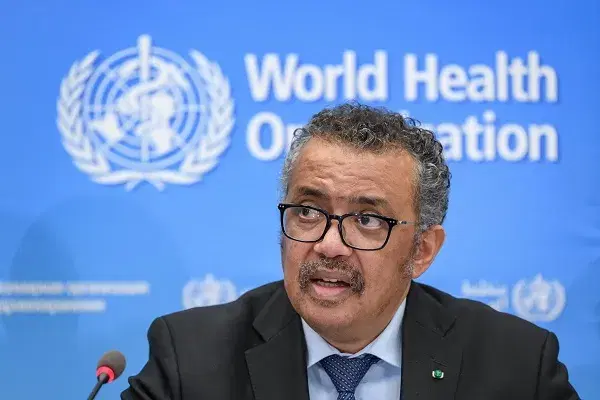
The World Health Organization (WHO) Director-General, Tedros Adhanom Ghebreyesus, has urged countries to accelerate efforts to finalise an international pandemic treaty, warning that deadly disease outbreaks such as the ongoing Ebola epidemic in the Democratic Republic of Congo (DRC) highlight the need for stronger global cooperation.
Tedros made the appeal on Monday as the ninth round of negotiations towards completing the agreement opened in Geneva, Switzerland.
He called on participating countries to resolve their differences and complete the treaty, which was adopted in May 2025 as a framework for improving the world’s response to future pandemics similar to COVID-19.
Pointing to recent disease outbreaks, the WHO chief said the proposed agreement was essential for protecting populations against health threats that could spread across national borders.
“The outbreak of hantavirus earlier this year, and the ongoing Ebola epidemic in DRC remind us of this threat,” he said in a written statement.
Tedros also stressed that the COVID-19 pandemic had demonstrated the limitations of individual countries attempting to manage major health emergencies without international cooperation.
“No country can protect itself from pandemics by acting alone,” he said.
Despite the adoption of the Pandemic Agreement in May 2025, negotiations have remained difficult, particularly over how its central Pathogen Access and Benefit-Sharing (PABS) mechanism would operate.
The proposed system is intended to establish arrangements for sharing access to pathogens with pandemic potential and ensuring that the benefits derived from them, including vaccines, diagnostic tests and treatments, are distributed equitably.
Disagreements between wealthy countries and developing nations over the practical implementation of the mechanism have delayed the completion of the treaty.
Tedros said the latest negotiations offered countries another opportunity to bridge their differences and strengthen collective preparedness against future outbreaks.
He warned that infectious disease threats emerging in one country could quickly become international health emergencies, making cooperation and equitable access to medical resources essential.
The negotiations are expected to focus on resolving outstanding disagreements over the pathogen-sharing framework and establishing a workable system for responding to future pandemic threats.