Now Reading: Wike Questions Onaiyekan’s Neutrality as Catholic Leaders, Youth Groups Rally Behind Cardinal
-
01
Wike Questions Onaiyekan’s Neutrality as Catholic Leaders, Youth Groups Rally Behind Cardinal
Wike Questions Onaiyekan’s Neutrality as Catholic Leaders, Youth Groups Rally Behind Cardinal

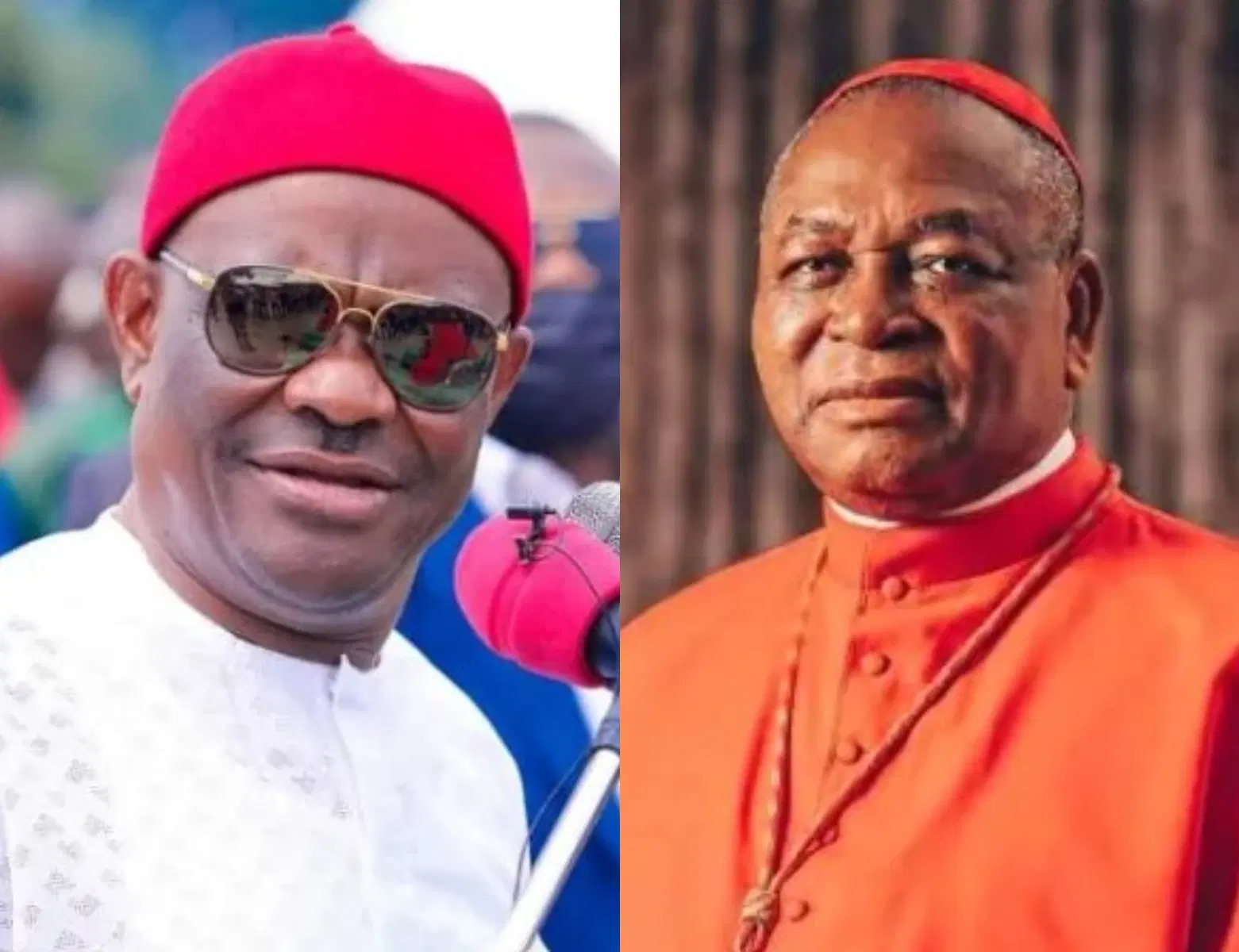
The Minister of the Federal Capital Territory (FCT), Nyesom Wike, has questioned the political neutrality of the Archbishop Emeritus of the Catholic Archdiocese of Abuja, John Cardinal Onaiyekan, over the cleric’s recent criticism of President Bola Tinubu’s administration.
Wike’s remarks have sparked reactions from the Northern Youth Council of Nigeria (NYCN), the Middle Belt Forum (MBF), the Catholic Laity Council of Nigeria (CLCN) and former Minister of Transportation, Rotimi Amaechi, all of whom defended the Cardinal’s right to speak on national issues.
The controversy followed comments by Cardinal Onaiyekan after the Catholic Bishops’ Conference of Nigeria (CBCN) met with President Tinubu, during which the bishops raised concerns over economic hardship, insecurity and governance.
Speaking during his monthly media briefing in Abuja, Wike argued that religious leaders should acknowledge government achievements alongside criticism, insisting that consistently negative comments create the impression of political bias.
“I am aware of the position of Cardinal Onaiyekan; all of us know, it’s not hidden, whom he supports; everybody knows that,” Wike said.
He maintained that while criticism of government is necessary, it should be balanced.
“It is not every time you say things are bad; nobody has heard you say government has done this well. Commend government when it has done well in certain areas and criticise where improvements are needed,” he said.
The minister also rejected claims that religious leaders were politically neutral during the 2023 general elections.
“People took sides, religious leaders took sides. It was very open. I would be stupid to sit here for anybody to tell me this person is impartial,” Wike added.
Wike Questions Bishops’ Position on INEC
Wike also criticised the Catholic bishops for urging the Independent National Electoral Commission (INEC) to remain neutral ahead of the 2027 general elections.
He questioned the basis of their concerns, saying allegations of bias should be supported with evidence.
“When you tell the public that INEC is biased, you must have facts to justify such a serious claim,” he said.
Northern Youths Back Cardinal
Responding to Wike’s remarks, the Northern Youth Council of Nigeria declared its support for Cardinal Onaiyekan, saying he merely reflected the hardship confronting millions of Nigerians.
In a statement signed by its National President, Isah Abubakar, the group described the Cardinal as “a respected elder statesman and moral voice” who spoke the truth about inflation, insecurity and the country’s economic challenges.
The council urged religious and traditional leaders across Nigeria to continue speaking out on issues affecting citizens’ welfare, justice and good governance.
Amaechi Defends Catholic Church
Former Minister of Transportation, Rotimi Amaechi, also defended the Catholic bishops, accusing the Presidency of attacking the Catholic Church instead of addressing the concerns raised.
Speaking during an interview on Channels Television, Amaechi said the bishops had every right to discuss hardship and the integrity of future elections with the President.
He insisted that Cardinal Onaiyekan was not aligned with any political candidate.
“He supports nobody. The only thing that pains him is the level of poverty, hardship and corruption in the country,” Amaechi said.
He added that religious leaders have a moral duty to hold governments accountable and recalled that the Catholic Church also criticised the administration of former President Muhammadu Buhari without facing similar attacks.
Middle Belt Forum, Catholic Laity Express Solidarity
The Middle Belt Forum also threw its weight behind the Cardinal and the CBCN, condemning what it described as unwarranted attacks on Onaiyekan for speaking about poverty and insecurity.
The forum urged the Federal Government to focus on addressing the realities facing ordinary Nigerians rather than attacking those raising concerns.
Similarly, the Catholic Laity Council of Nigeria said Cardinal Onaiyekan’s comments were made out of concern for the country and reflected the Church’s responsibility to speak truth to power.
The council maintained that discussions on issues affecting Nigerians should not remain behind closed doors and called for continued dialogue between the Presidency and the Catholic Church