Now Reading: Atiku Challenges FG Over $16bn Power Spending Allegations, Demands Evidence
-
01
Atiku Challenges FG Over $16bn Power Spending Allegations, Demands Evidence
Atiku Challenges FG Over $16bn Power Spending Allegations, Demands Evidence

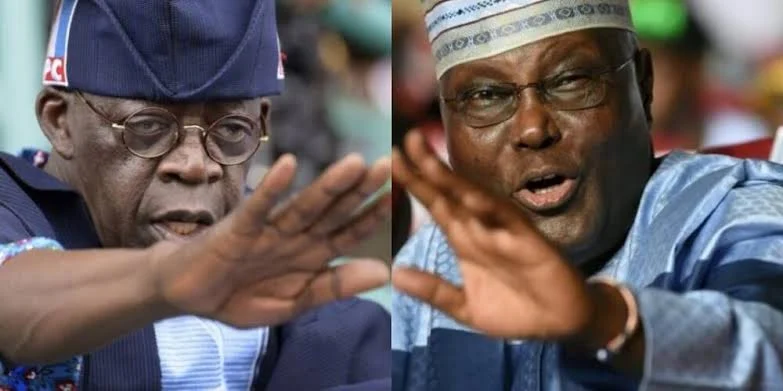
Former Vice President Atiku Abubakar has challenged the Federal Government to investigate and prosecute him if it has evidence linking him to alleged mismanagement of about $16 billion spent on Nigeria’s power sector.
Atiku, the presidential candidate of the African Democratic Congress (ADC), accused the President Bola Tinubu administration of reviving old allegations to distract Nigerians from questions surrounding the use of funds saved from the removal of petrol subsidy.
The controversy dates back to the power-sector spending and commitments under the administration of former President Olusegun Obasanjo. The expenditure, initially reported at about $11 billion and later widely cited as $16 billion, became the subject of investigations by the National Assembly after Obasanjo left office in 2007.
Responding to the renewed allegations, Atiku said successive governments had access to Nigeria’s investigative institutions but had failed to prosecute him over the claims. He maintained that although he chaired the National Council on Privatisation as Vice President, he did not oversee the implementation of the power projects in question.
“I have repeatedly asked to be investigated. I left office in 2007 and have spent much of the period since then opposing governments in power. If there is evidence that I stole public money, why has no government produced it before a court?”
Atiku said the government should instead explain how the additional revenue generated since the removal of fuel subsidy has been used. He argued that Nigerians have faced higher petrol, transport and food prices while struggling with declining purchasing power.
“Investigate me. Invite me. Produce the evidence. Prosecute me if you have a case. But propaganda cannot substitute for evidence,” he said.
The former Vice President also criticised what he described as preferential treatment for powerful economic interests through fiscal incentives, waivers and concessions. He insisted that the government could not justify removing relief from ordinary Nigerians while defending interventions benefiting influential businesses.
The Tinubu administration removed petrol subsidy shortly after taking office in May 2023, arguing that the policy had become too costly for government finances. The decision increased petrol prices and contributed to higher living and transportation costs, although the government has maintained that the savings are being redirected to development and social programmes.
Presidency attacks Atiku over subsidy plan
The Presidency, however, has accused Atiku of repeatedly changing his position on petrol subsidy.
Special Adviser to the President on Information and Strategy, Bayo Onanuga, said Atiku and his aides had offered different explanations of the proposal within a week. He challenged the ADC candidate to clearly state how a proposed “targeted subsidy” would be funded, who would benefit and what conditions would determine its eventual removal.
Onanuga also argued that petrol prices were not the only factor driving Nigeria’s cost-of-living crisis, pointing to insecurity, exchange rates, logistics, storage, flooding and agricultural input costs.
He further questioned whether Atiku’s proposed subsidy would cover other petroleum products such as diesel, kerosene and aviation fuel, noting that crude oil refining produces several products beyond petrol.
APC tells Atiku to go to court
The All Progressives Congress (APC) also challenged Atiku to provide evidence for his allegations that political actors he described as “thieves” were responsible for Nigeria’s economic and political problems.
APC Director of Publicity, Bala Ibrahim, said Atiku should approach the courts if he had evidence to support his claims. He questioned whether the former Vice President had confidence in the judiciary if he was unwilling to pursue the allegations through legal channels.
NANS rejects subsidy return
Meanwhile, the National Association of Nigerian Students (NANS) opposed Atiku’s proposal to restore fuel subsidy if elected president in 2027.
NANS President Akinteye Babatunde described the previous subsidy regime as unsustainable, arguing that it consumed trillions of naira, encouraged smuggling and limited government investment in critical sectors.
He said the focus should now be on ensuring that the savings from subsidy removal are properly invested in education, healthcare, infrastructure and agriculture.
The student body warned that simply returning to the old subsidy system without fixing the structural problems that made it unsustainable would amount to a political response to a genuine economic challenge.