Now Reading: Court Moves to Hear Suit Seeking to Bar Goodluck Jonathan from 2027 Presidential Election Bid
-
01
Court Moves to Hear Suit Seeking to Bar Goodluck Jonathan from 2027 Presidential Election Bid
Court Moves to Hear Suit Seeking to Bar Goodluck Jonathan from 2027 Presidential Election Bid

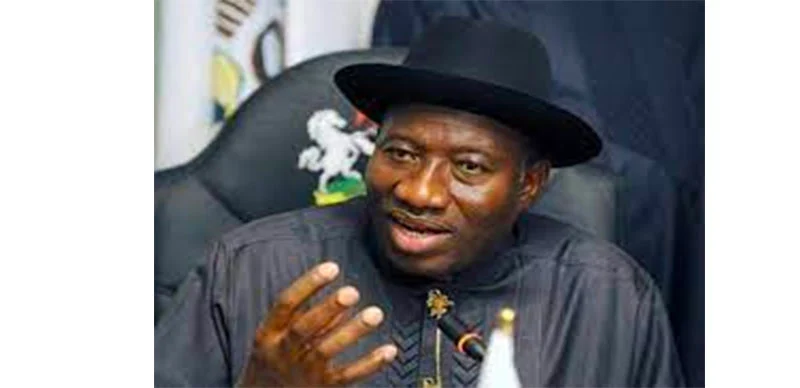
A Federal High Court in Abuja is set to hear a high-profile suit challenging former President Goodluck Jonathan’s eligibility to contest the 2027 presidential election, reigniting legal and political debate over Nigeria’s constitutional term limits.
The case, filed under suit number FHC/ABJ/CS/2102/2025, is seeking a court declaration that Jonathan is no longer qualified to run for president, citing provisions of the 1999 Constitution. The applicant, lawyer Johnmary Jideobi, argues that the former president has already exhausted his constitutional allowance for holding the office.
Court records show that Justice Peter Lifu had earlier ordered that hearing notices be served on all defendants after some parties failed to file their responses within the required timeframe.
Jonathan is named as the first defendant in the suit. The Independent National Electoral Commission (INEC) and the Attorney-General of the Federation (AGF) are listed as second and third defendants respectively.
At the centre of the case is a request asking the court to stop Jonathan from presenting himself to any political party as a presidential candidate in 2027. The plaintiff is also seeking an order restraining INEC from accepting or publishing his name on any list of candidates.
The legal action raises a constitutional question on whether Jonathan, having completed the remaining tenure of the late President Umaru Musa Yar’Adua in 2010 and subsequently served a full elected term after the 2011 election, can lawfully seek another term in office.
Supporting the suit, Emmanuel Agida deposed in an affidavit that Jonathan’s reported interest in returning to the ballot triggered the legal challenge. He maintained that the former president had already served the maximum two-term limit allowed by law.
The affidavit further warned that allowing Jonathan to contest could result in him taking the presidential oath for a third time, an act the plaintiff described as unconstitutional.
Beyond the courtroom, the case has added momentum to ongoing political conversations about Jonathan’s possible return to the 2027 race, though the former president has not formally declared any ambition.
Jonathan has recently been vocal on national issues, including low voter turnout and governance challenges. He has urged stronger civic participation and better leadership planning for long-term national development.
“I have observed elections in about 14 or more African countries… Nigeria has the lowest turnout in every election cycle,” he said at a recent event, while stressing the importance of credible elections and national stability.
He also highlighted Nigeria’s economic and migration challenges, linking them to weak leadership structures over time, but stopped short of addressing speculation about a comeback bid.
As the court prepares to hear the matter, the outcome could carry significant implications for Nigeria’s 2027 political landscape and the interpretation of presidential term limits under the Constitution.