Now Reading: EU Leaders Warn Europe Cannot Replace Starlink as Ukraine Faces Satellite Disruptions
-
01
EU Leaders Warn Europe Cannot Replace Starlink as Ukraine Faces Satellite Disruptions
EU Leaders Warn Europe Cannot Replace Starlink as Ukraine Faces Satellite Disruptions

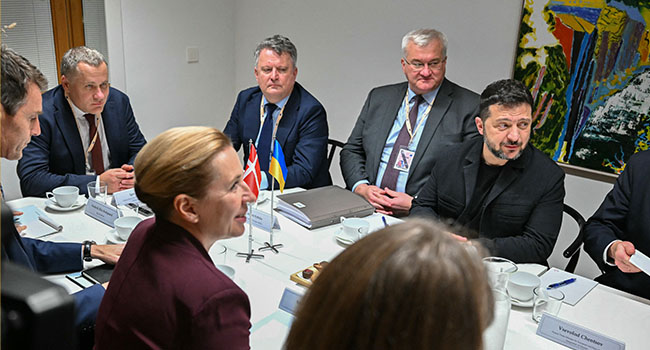
European leaders are warning that Europe remains heavily dependent on Elon Musk’s Starlink satellite network to support Ukraine’s war effort, as reported disruptions to the system raise fresh concerns about Kyiv’s ability to sustain battlefield communications.
The issue took centre stage at an EU summit on Friday, October 16, 2026, where Ukrainian President Volodymyr Zelensky joined European leaders for talks on Ukraine’s security and defence. EU foreign policy chief Kaja Kallas said Europe currently lacked a ready alternative to the satellite technology operated by Musk’s SpaceX.
“Starlink is really necessary for Ukraine and unfortunately in (the) short term Europe can’t replace this capability,” Kallas told reporters before the meeting. She added that Europe must urgently address gaps in its defence capabilities.
Ukraine relies on Starshield, Starlink’s military-focused satellite service, for battlefield communications, mid-range strikes against Russian-occupied areas and the operation of interceptor drones. The country also uses Starlink’s civilian satellite service, although the report said that system is not used for offensive operations.
The concerns intensified after Ukrainian officials reported restrictions and slower connection speeds affecting some Starlink terminals during the week. Musk said responsibility for any disruption rested with the US government, rather than SpaceX. However, the precise cause of the reported service problems remained unclear.
Latvian Prime Minister Andris Kulbergs described Starlink as crucial to Ukraine’s ability to fight back against Russian forces. He warned that Europe would need time to develop comparable capabilities, stressing that the continent’s existing resources were not sufficient to meet Ukraine’s needs.
Dutch Prime Minister Rob Jetten said he had discussed ways for European countries to provide similar services with French President Emmanuel Macron. Meanwhile, Kallas said the European Defence Agency had identified critical capability gaps that needed to be addressed as quickly as possible.
The disruptions also prompted discussions between British Defence Minister Wes Streeting and US Defence Secretary Pete Hegseth. Streeting told the BBC that the UK had not established what caused the interruption but said Hegseth had assured him the service had been restored. The episode has renewed pressure on European governments to develop alternative satellite communications and reduce their reliance on technology controlled by a private company.