
Now Reading: Kabul Water Crisis Deepens as Experts Warn City Could Run Dry by 2030
-
01
Kabul Water Crisis Deepens as Experts Warn City Could Run Dry by 2030
Kabul Water Crisis Deepens as Experts Warn City Could Run Dry by 2030

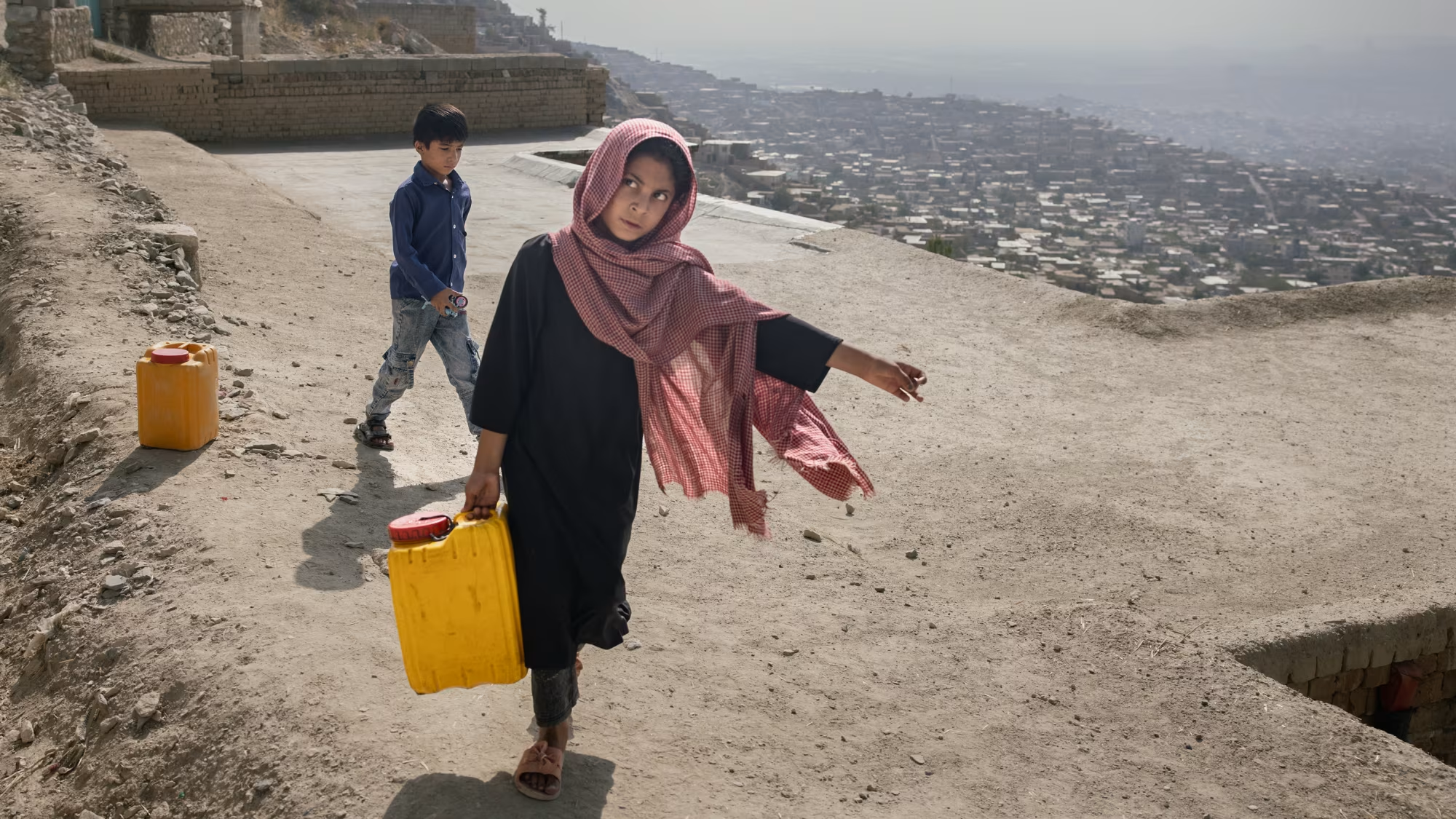
For Shazia, the future of a city without water is already part of everyday life.
The 34-year-old resident of Khair Khana, Kabul, lives with her husband and three children but has no running water at home. Unable to afford regular deliveries from private water tankers, the family walks to a nearby mosque, waits in long queues and carries buckets home from a hand pump.
The daily struggle is taking a toll. Shazia said she often has to pull her children out after school to help collect water, while the weight of the buckets leaves her with back pain. “We have no choice,” she said.
Kabul’s wider water crisis is becoming increasingly severe. A 2025 Prosper Global assessment warned that the Afghan capital could become the first modern capital to effectively run out of water, with groundwater extraction far exceeding natural replenishment. The report said nearly half of the city’s boreholes were already dry and warned of a possible tipping point without urgent intervention.
The problem is being driven by several pressures at once. Kabul’s rapidly growing population has increased demand for water, while years of drought, declining snowfall and climate change have reduced the natural recharge of groundwater. Recent reporting has also documented wells drying up and water supplies becoming increasingly unreliable for households across the capital.
Groundwater is at the heart of Kabul’s water system, but residents are being forced to dig deeper as existing wells fail. Families who can afford it spend large sums drilling new wells, while poorer households depend on hand pumps, private tankers or other increasingly expensive sources.
The financial burden is especially severe for low-income families. Prosper Global found that some households spend as much as 30 per cent of their income on water, while its assessment also warned that much of Kabul’s groundwater is contaminated by sewage and substances including arsenic and salinity.
Kabul’s rapid expansion has made the situation worse. The city’s population has grown dramatically since 2001, while multistorey buildings and densely packed neighbourhoods have placed additional pressure on already depleted aquifers. More people are also arriving in the capital after being displaced or returning from neighbouring countries.
Climate change is adding another layer to the problem. Afghanistan has experienced prolonged drought and declining snow resources, while heavy rainfall can produce flash floods rather than replenishing underground water reserves because much of Kabul is covered by roads and other hard surfaces.
Authorities have acknowledged the seriousness of the shortage. In September, Afghan officials held a high-level meeting involving several government institutions to address Kabul’s worsening water situation. Projects involving dams, wells and other measures are being pursued, but experts warn that major infrastructure projects will take time and require substantial resources.
One proposed solution is the Shahtoot Dam, which is intended to supply water to millions of people, while another plan involves transporting water from the Panjshir River to Kabul. Both face significant financial, construction and political challenges.
The crisis is also creating a public-health risk. As groundwater becomes harder to access and contamination remains widespread, families are forced to choose between buying expensive water, travelling long distances to collect it or continuing to use potentially unsafe sources.
For many residents, leaving Kabul is not an easy escape either. Their jobs, homes and families are tied to the city, while water shortages are affecting other parts of Afghanistan as well.
Kabul therefore offers a warning about what “day zero” can look like. It may not arrive as a single moment when every tap suddenly stops flowing. Instead, it can unfold slowly, as wells disappear, water prices rise, children spend hours collecting supplies and families are pushed toward impossible choices.
For residents such as Shazia, that crisis is no longer a distant projection. It is already shaping where they go, how they spend their money and how their children spend their days.
And unless water supplies recover or major interventions succeed, the pressure on Kabul is expected to become even more severe in the years ahead.