Now Reading: Kaduna Has Only 1,600 Licensed Doctors as NMA Warns of Worsening Shortage
-
01
Kaduna Has Only 1,600 Licensed Doctors as NMA Warns of Worsening Shortage

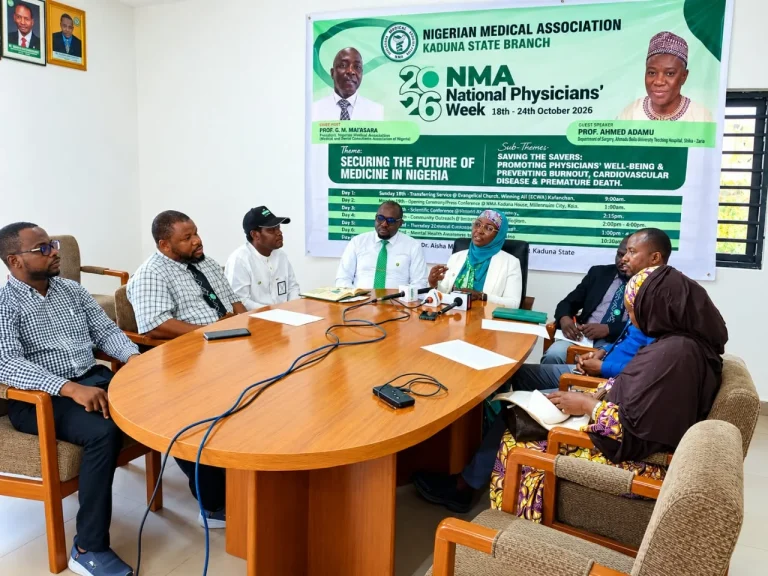
The Nigerian Medical Association (NMA), Kaduna State Branch, has raised concerns over a declining number of medical doctors in the state, revealing that only about 1,600 doctors are currently licensed to practise, down from approximately 2,000 previously.
The association’s state chairman, Dr Aisha Mustapha, said the shortage, alongside insecurity, poor remuneration, professional burnout and inadequate healthcare infrastructure, was threatening effective healthcare delivery across Kaduna State.
Mustapha spoke on Monday at a press conference ahead of the 2026 National Physicians’ Week, themed “Securing the Future of Medicine in Nigeria.” She disclosed that the state had an estimated doctor-to-population ratio of one physician to every 6,000 residents, describing the situation as a serious challenge requiring urgent government intervention.
“The number of doctors currently licensed to practise in Kaduna State is approximately 1,600. We used to have about 2,000, but because of all these challenges, the numbers keep declining,” she said.
The NMA chairman identified poor pay, inadequate staffing, limited career advancement, insecurity and difficult working conditions as major factors discouraging doctors from remaining in the state’s healthcare system. She urged the government to strengthen recruitment and retention strategies while improving welfare and workplace conditions.
Mustapha also expressed concern over differences in remuneration between doctors employed by the Kaduna State Government and those working in teaching hospitals. According to her, the disparities have encouraged doctors to move from general hospitals to institutions offering better financial benefits, further worsening staffing shortages in facilities that lose personnel.
Although she acknowledged efforts by the state government to improve doctors’ pay, she called for salary harmonisation to ensure that medical practitioners in general hospitals were not disadvantaged. She said fair remuneration and better working conditions were essential to retaining doctors and maintaining access to essential medical services.
Insecurity, she added, remained another significant barrier to retaining healthcare workers, particularly in communities where medical personnel face threats to their safety. Mustapha warned that doctors could be reluctant to accept postings to certain areas, leaving vulnerable and rural populations with limited access to medical care.
“Some of us, even if we get a job in certain hospitals where we would love to work, will not be able to go there because of the insecurity situation in that area,” she said.
She called on the government and security agencies to work together to protect healthcare workers and ensure that hospitals remained accessible to patients, including residents of communities affected by insecurity.
Mustapha further warned that excessive workloads, prolonged duty hours and insufficient rest were exposing doctors to physical exhaustion, emotional strain and chronic stress. She called for improved staffing levels, reasonable duty schedules, adequate rest periods and access to healthcare and psychological support for medical professionals.
“A physician who is physically exhausted, emotionally depleted, chronically stressed and personally neglected cannot provide the quality healthcare patients deserve,” she said.
The association also identified limited opportunities for career progression and professional development as factors that could discourage doctors from staying in some general hospitals. Mustapha said clearer promotion pathways, continuous training and access to modern medical equipment would help improve morale and encourage doctors to build long-term careers within the state.
Addressing the migration of Nigerian doctors abroad, she expressed concern over the loss of trained medical professionals due to inadequate incentives and unfavourable working conditions. She advocated deliberate retention policies, improved remuneration and stronger collaboration with Nigerian medical professionals in the diaspora to strengthen the country’s healthcare system.
The NMA chairman also called for greater investment in digital health, medical innovation and education to prepare Nigerian doctors for emerging technologies, including artificial intelligence, telemedicine and electronic medical records. She said these tools could improve healthcare delivery and expand access to services in underserved communities, provided technological advancement did not come at the expense of adequate staffing and the doctor-patient relationship.
Mustapha said the association would continue engaging the Kaduna State Government, hospital administrators, security agencies and other stakeholders on measures to improve doctors’ safety, welfare and professional development.
She maintained that addressing the challenges confronting medical practitioners was critical to easing pressure on the remaining workforce and ensuring residents across Kaduna State could access safe and quality healthcare.