Now Reading: Shettima Urges Open Government–Business Dialogue, Defends Tinubu’s Economic Reforms at NECA Summit
-
01
Shettima Urges Open Government–Business Dialogue, Defends Tinubu’s Economic Reforms at NECA Summit
Shettima Urges Open Government–Business Dialogue, Defends Tinubu’s Economic Reforms at NECA Summit

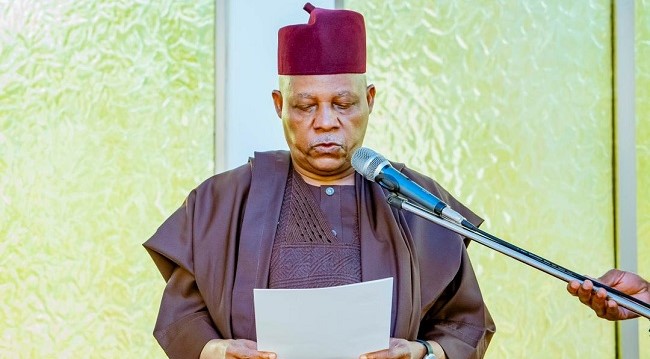
Vice President Kashim Shettima has called for stronger and more transparent engagement between the Federal Government and Nigeria’s business community, insisting that no economy can thrive without active collaboration with employers.
He made the remarks on Wednesday at the 5th Nigerian Employers’ Summit in Abuja, where he stressed that government policies must translate into real business impact across the country—from Lagos to Kano and Aba.
Represented by former FCT Minister and Special Adviser to the President on General Duties, Dr. Aliyu Modibbo Umar, Shettima said Nigeria is currently at a critical economic turning point that demands honest conversations about reform and productivity.
He warned that businesses cannot survive on sentiment, but on stable policies, reliable infrastructure, fair taxation and a predictable economic environment that supports long-term planning.
Shettima said the administration of President Bola Tinubu remains committed to removing structural barriers that slow down enterprise, including reducing bureaucratic bottlenecks and accelerating the digitalisation of government services.
According to him, reforms being implemented in Abuja must be felt quickly by businesses nationwide, not delayed by inefficiency or administrative friction.
“Foresight without courage produces fine speeches and empty outcomes. Courage without foresight produces motion without progress,” he said, adding that effective leadership requires both vision and decisive action.
He praised the Renewed Hope Agenda, saying it was designed to confront long-standing economic distortions that have weakened investor confidence and constrained job creation.
Shettima explained that when President Tinubu assumed office, the economy was burdened by fuel subsidy challenges, fragmented foreign exchange systems, weak revenue generation and declining investor confidence.
He argued that delaying reforms would have worsened Nigeria’s economic instability, insisting that tough decisions were necessary to reset the foundation for sustainable growth.
The Vice President maintained that removing fuel subsidies and restructuring the foreign exchange market were central to restoring macroeconomic stability and improving transparency in the system.
He added that fiscal and tax reforms are aimed at reducing multiple taxation, easing compliance, and expanding the tax base while protecting small businesses and vulnerable citizens.
“Businesses do not reject taxation. They reject multiple taxation, harassment and systems that punish compliance while rewarding informality,” he said.
Shettima also highlighted ongoing efforts to streamline government processes, noting that inefficiencies such as delayed approvals and unclear regulations increase the cost of doing business in Nigeria.
He assured that digital reforms would ensure that policies made at the federal level are effectively implemented across all states without delay.
Earlier, the Director-General of the Nigerian Employers’ Consultative Association (NECA), Mr. Adewale Oyerinde, said the summit has, over the past five years, become a major platform for shaping policy dialogue between government and the private sector.
He noted that recommendations from previous editions have influenced national policy direction and strengthened trust between both sides.